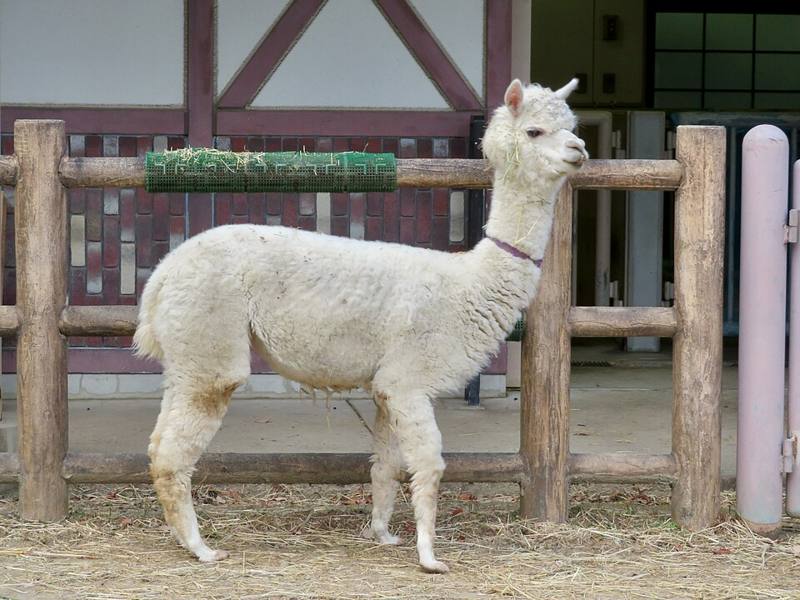
Why llamas spit
Llamas are famous for spitting, but they rarely aim at people. Here is why llamas spit, what the "spit" actually is, the warning signs before it happens and how to stay out of range.
The most dramatic llama habit
Spitting is the behavior everyone associates with llamas, and it fits our brand perfectly: a little drama when someone crosses the line. But the reality is more interesting, and less personal, than most people think.
What the spit really is
A llama's spit is not just saliva. When a llama is truly annoyed, it can bring up partly digested food and liquid from its stomach and launch it. The result is green, smelly and memorable. A mild spit may be mostly saliva and air; a serious one includes stomach contents.
After a big spit, a llama often stands with its mouth hanging open and lower lip drooping, apparently trying to get rid of the bad taste. Spitting is unpleasant for the llama too.
Why llamas spit
Llamas spit mainly at other llamas, as a way to sort out social issues without fighting:
| Reason | Example |
|---|---|
| Food competition | Telling another llama to back off from the feed bucket |
| Social rank | Keeping a lower-ranked herd member in its place |
| Rejecting a male | A pregnant female may spit to turn away a male |
| Personal space | Warning another llama that is too close |
| Stress or fear | A frightened llama defending itself |
Do llamas spit at people?
Usually, no. A well-raised llama has little reason to spit at humans. People sometimes get hit by accident when they stand between two llamas arguing over food.
Llamas that were over-handled or bottle-fed without other llamas as babies may grow up treating people as fellow llamas. These animals can be more likely to spit at, push or challenge people. Responsible breeders avoid this by letting crias grow up with their herd.
Warning signs before the spit
Llamas usually warn before spitting. Watch for:
- Ears pinned back flat against the head.
- Head raised with nose tilted up.
- A gurgling sound as the llama brings up stomach contents.
- Puffed cheeks or chewing motions.
- A stare at the target.
If you see these signs, calmly step away and give the llama space.
How to avoid getting spat on
- Do not stand between llamas at feeding time.
- Approach calmly from the side, not head-on.
- Do not grab a llama's head or face; most dislike it.
- Follow the owner's instructions when visiting farms.
- Respect their space; llamas often prefer not to be petted on the head.
Spitting compared
Alpacas spit for the same reasons and in the same way. Camels, their larger cousins, can also bring up stomach contents when agitated. It is a shared camelid behavior. See llamas vs alpacas.
The softer side
Despite their reputation, llamas are generally calm, gentle and curious. They hum to each other, explore new things carefully, and many work happily with people as trekking companions, guard animals and therapy visitors. See llama facts.
Llamas often spit at each other over very small matters, like who gets the first bite of hay. Spitting lets them settle disputes without biting or kicking, which could cause real injuries.