Guides / Candle history and craft
How candles are made
A step-by-step look at how a container candle is made, from choosing wax and wick to adding fragrance, pouring, cooling and curing, plus how pillars, tapers and dipped candles differ.
The basic recipe
Every candle has three key parts: wax as fuel, a wick to carry the melted wax up to the flame, and usually fragrance and sometimes dye. The skill is in balancing them so the candle burns cleanly and evenly and smells great. See wax types and wicks explained.
Making a container candle, step by step
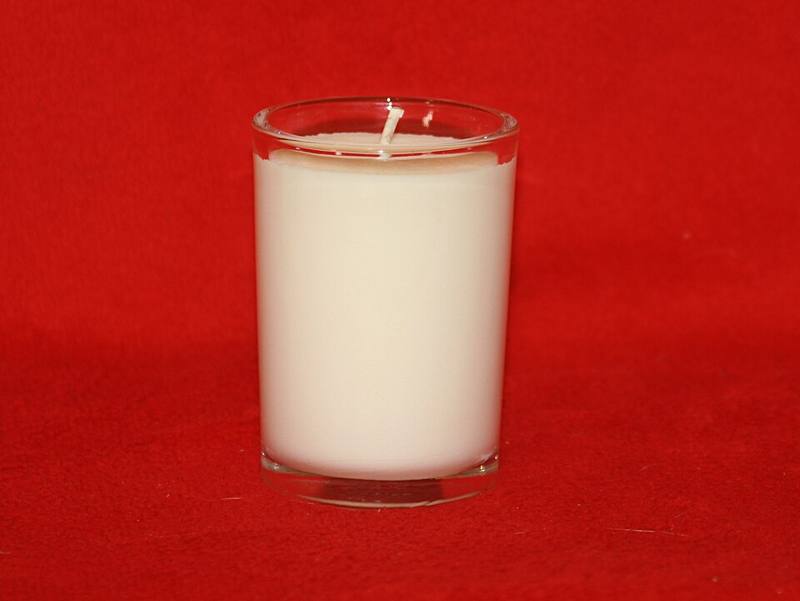
- Choose the vessel. Containers must be heat-resistant and stable, such as thick glass, ceramic or metal designed for candles.
- Pick the wick. Wick size depends on the container's diameter, the wax and the fragrance. Makers test burn candles to find the right size.
- Secure the wick. The wick is fixed to the bottom center of the container with a sticker or a dab of glue, and held upright with a centering tool or clip.
- Melt the wax. Wax is melted gently, often in a double boiler or a dedicated melter, to the temperature recommended by the wax supplier.
- Add fragrance. Fragrance oil is stirred in at the supplier's recommended temperature, measured as a percentage of wax weight. Stirring gently for a couple of minutes helps it bind evenly.
- Add color (optional). Candle dyes are added in small amounts.
- Pour. The wax is poured slowly at the recommended pouring temperature to reduce bubbles and surface problems.
- Cool. The candle cools at room temperature, away from drafts. Rapid cooling can cause cracks, sinkholes or rough tops.
- Trim and finish. Once set, the wick is trimmed to about a quarter inch, and the lid and label are added.
- Cure. The candle rests before burning so the fragrance can settle into the wax. See curing and fragrance load.
Common problems and fixes
| Problem | Common cause | Typical fix |
|---|---|---|
| Sinkholes or cavities near the wick | Wax shrinks as it cools | A second, small top-up pour |
| Frosting (white crystals on soy) | Natural soy wax crystallization | Cosmetic only; pour temperature can help |
| Wet spots (glass separation) | Wax pulling from the glass as it cools | Warm containers before pouring; cosmetic |
| Sweating oil | Too much fragrance or temperature changes | Lower fragrance load; store stable |
| Weak scent | Low fragrance, wrong temperature, not cured | Follow supplier guidelines and cure |
| Tunneling | Wick too small | Test and size up the wick |
How other candles are made
- Pillar candles are poured into molds with harder wax so they can stand freely after unmolding.
- Taper candles are traditionally made by dipping a wick repeatedly into melted wax, building up layers.
- Votives and tealights are small molded or container candles.
- Rolled beeswax candles are made by rolling sheets of beeswax around a wick.
See candle types for more.
Testing is the secret
Professional candle makers test burn every design. They light sample candles for set periods, then check:
- Does the melt pool reach the edges within a few hours?
- Is the flame steady and not too tall?
- Is there soot or mushrooming on the wick?
- How strong is the scent at different points?
A design is adjusted and retested until it burns well from top to bottom.
Safety in candle making
Hot wax can cause serious burns and can ignite if overheated. Never leave melting wax unattended, use a thermometer, keep a lid nearby to smother flames and never pour water on a wax fire.
Hand-poured versus mass-produced
Hand-poured candles are made in small batches, often with more attention to wick testing and curing. Mass-produced candles benefit from consistency and lower cost. Both can be excellent; what matters is good materials, tested wicks and safe containers.