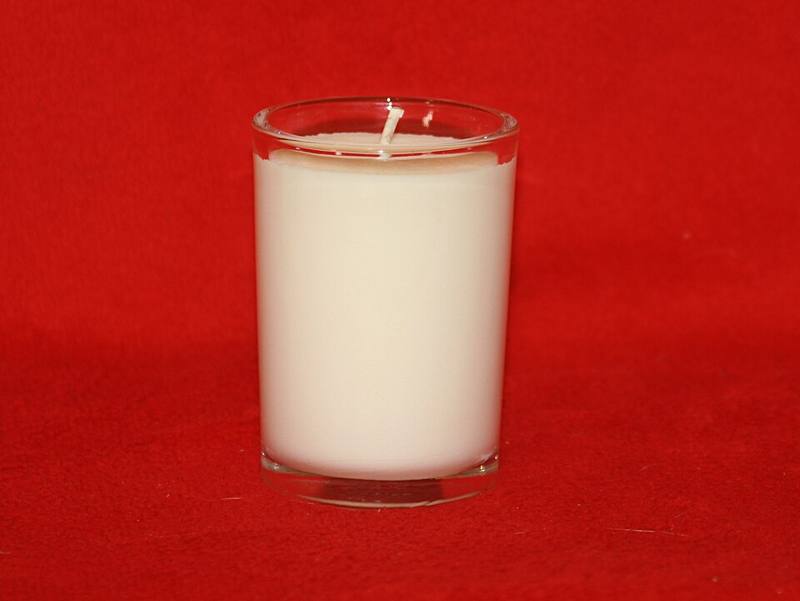
Candle wicks explained
The wick controls the size of the flame, the melt pool and the amount of soot. Learn how cotton and wood wicks work and how wick size changes the way a candle burns.
What a wick actually does
A wick is a pump. The flame melts wax, and the liquid wax climbs the wick by capillary action, the same effect that lets a paper towel soak up a spill. Near the flame the wax turns into vapor, and it is the vapor that burns. The wick itself burns away slowly as the candle gets shorter.
Because the wick controls how much fuel reaches the flame, it decides almost everything about how a candle behaves: flame height, melt pool width, how fast the candle burns down and how much smoke it makes.
Wick too big or too small
| Problem | What you see | Likely cause |
|---|---|---|
| Tall, flickering flame | Black soot on the jar, visible smoke | Wick too large or not trimmed |
| Tiny flame that drowns | Narrow melt pool, tunneling | Wick too small for the jar |
| Carbon "mushroom" on the tip | Lumpy black cap, falling debris | Wick too long, or heavy fragrance or dye |
| Flame goes out in its own pool | Wax floods the wick | Wick too small or trimmed too short |
Candle makers test wick sizes for each jar width, wax and fragrance before selling a candle. That is why the best fix for most wick problems is simply trimming to the right length, covered in trimming the wick.
Cotton wicks
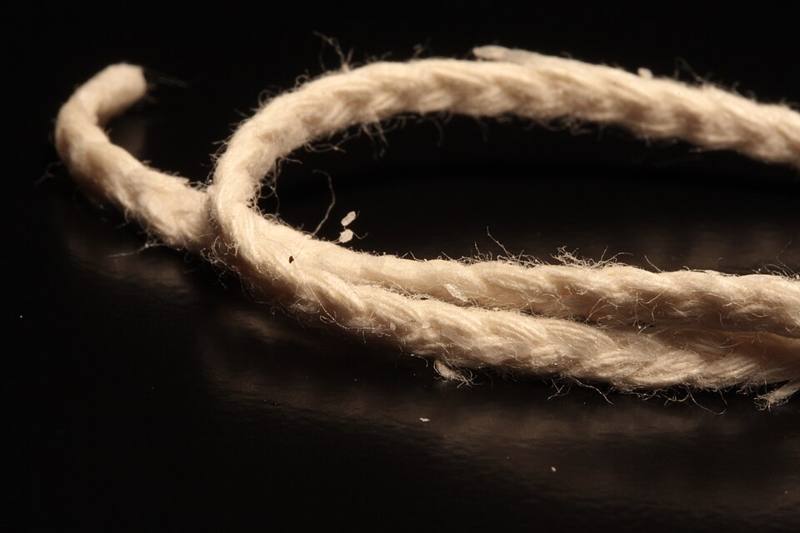
Most candles use braided or flat cotton wicks. Some have a thin paper core, and some are coated so they stand upright in soft wax. Braiding makes the wick curl slightly as it burns, so the tip bends into the hottest part of the flame and burns off. That self-trimming effect helps, but it does not replace trimming before each burn.
Older candles sometimes had wicks with a metal core. Lead-core wicks were banned in the United States in 2003, and reputable makers today use cotton, paper or wood wicks instead.
Wood wicks
Wooden wicks are thin strips of wood, sometimes layered with veneer. They make a gentle crackling sound that many people enjoy. They need a bit more care: trim them to about 3 mm (1/8 inch) and light them along the full length of the wood, holding the flame there for a few seconds. If a wood wick struggles, it is usually too long, or the wax around it has not melted yet.
Single wick or multiple wicks
Wide candles often use two or three wicks because one flame cannot melt the whole surface. A three-wick candle melts quickly and gives a strong scent, so it suits large rooms. Burn all the wicks at once, never just one, or the candle will melt unevenly and tunnel.
Signs of a healthy wick
- The flame is steady, upright and about 1 to 2.5 cm (0.5 to 1 inch) tall.
- There is little or no visible smoke while burning.
- The melt pool reaches the edge of the jar within a few hours.
- The tip stays fairly clean, with only a small carbon bead.
Common wick myths
- "Never trim a wick, it burns off on its own." Braided wicks curl and burn partly, but trimming before each burn still prevents soot and tall flames.
- "A bigger flame means more scent." A big flame usually means more soot, not more fragrance. Scent comes mainly from a wide, warm melt pool.
- "Wood wicks are always better." They are a style choice. A well-matched cotton wick burns just as cleanly.
If a flame becomes very tall or starts throwing sparks, blow it out, let the candle cool, trim the wick and remove any debris before relighting. See candle fire safety.