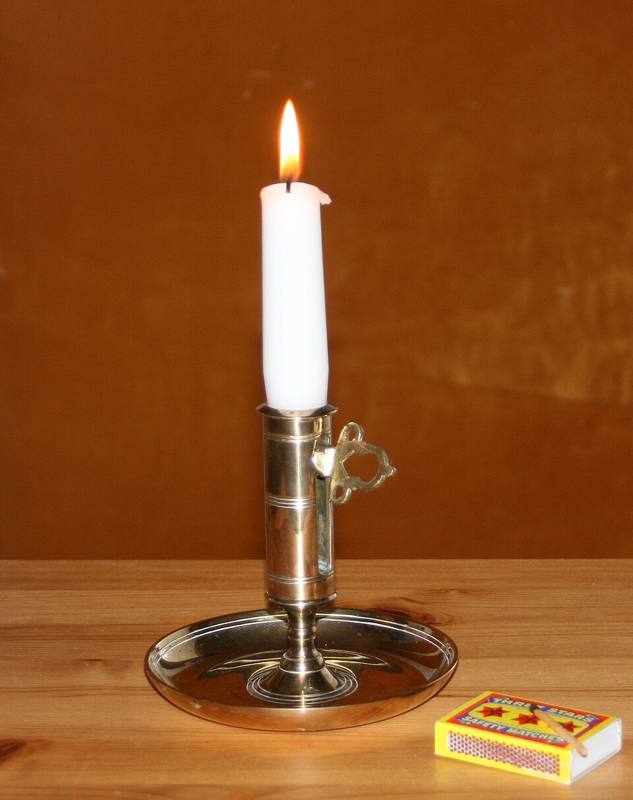
Candle fire safety
Candles are open flames. These simple rules, based on common fire-safety guidance, keep your home, children and pets safe while you enjoy the glow.
Why it matters
A candle feels gentle, but it is still an open flame. Fire-safety organizations such as the US National Fire Protection Association (NFPA) report that most home candle fires start when something that can burn is too close to the flame, and that bedrooms are a common place for them to begin. Candle fires also peak during the holiday season, when homes are full of decorations.
Almost every candle fire is preventable with a few habits.
This page is general guidance. Always follow the instructions on your candle's label and your local fire-safety rules.
The golden rules
- Never leave a burning candle unattended. Blow it out when you leave the room or go to sleep.
- Keep a 30 cm (12 inch) clear zone around the flame, free of curtains, books, paper, decorations and bedding.
- Use a sturdy, heat-resistant surface that cannot tip over.
- Keep candles out of reach of children and pets, and never let children light or move candles.
- Never burn a candle where someone is sleeping or could fall asleep.
- Never use candles near oxygen equipment used for medical care.
Placement
| Do | Do not |
|---|---|
| Place on a level, heat-proof plate or tray | Place on a bookshelf, under a shelf or inside a cupboard |
| Keep away from vents, fans and open windows | Put near curtains, blinds or plants |
| Leave space between multiple candles | Cluster candles so their heat combines |
| Use stable holders for tapers and pillars | Leave tealights directly on furniture |
While it burns
- Trim the wick before lighting. See trimming the wick.
- Keep matches and wick trimmings out of the melt pool.
- Do not move a candle while it is lit or while the wax is liquid.
- If the flame grows tall or smokes, blow it out, let it cool and trim the wick.
- Stop burning a container candle when about 1 cm (1/2 inch) of wax remains, so the glass does not overheat.
Putting it out safely
- Use a snuffer, or gently blow. Shield your hand and face and avoid splashing hot wax.
- Never use water: it can make hot wax spatter and can crack hot glass.
- Make sure the wick has stopped glowing before you leave the room.
If something goes wrong
- If a candle jar cracks or the flame gets out of control, cover it with a non-flammable lid or a snuffer if it is safe to do so.
- If a fire spreads beyond the candle, get everyone out, close the door behind you and call your local emergency number. In Saudi Arabia, the unified emergency number is 911; Civil Defense can also be reached on 998.
- Have working smoke alarms on every level of the home and test them regularly.
Safer alternatives
If you love fragrance but live with very young children, curious pets or a busy household, consider flameless options such as reed diffusers or electric wax warmers. Our candles, diffusers and melts guide compares them.
Quick daily habit
Before lighting any candle, ask three questions: Is it stable? Is the area clear? Will I be here the whole time? If the answer to any is no, wait. The candle care checklist turns these rules into a tickable list.